
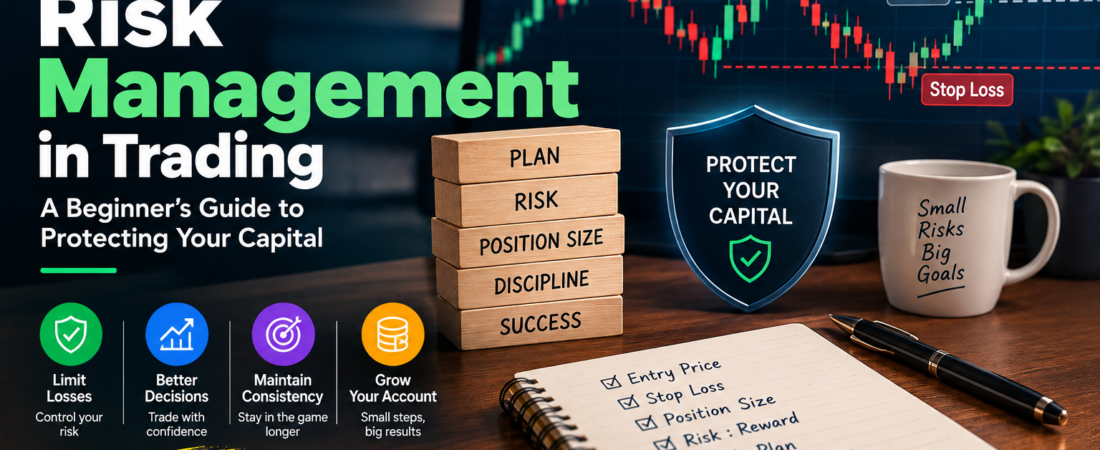
Risk management isn’t some side note in trading—it’s really where things get real. Lots of beginners spend all their energy hunting for the perfect “buy” signal. But honestly, that’s the easy part. The real test is sticking around long enough to learn and improve, and you only get to do that if you protect your cash when things go sideways.
Markets don’t care how slick your setup looks. Even your “sure things” turn sour sometimes, and that’s when risk management steps in. It doesn’t keep you from ever losing, but it makes sure you don’t wipe yourself out before you figure out what works.
At its core, risk management is all about answering one question before you trade: how much am I okay with losing? Then, you stick to it, so one dumb trade doesn’t nuke your account.
That’s really what gives you a chance to learn—good risk management keeps you in the game.
What does this actually look like? It’s not just a single rule; it’s a set of guidelines you actually follow, like:
- Deciding the amount you’re risking per trade
- Using stop-losses (and actually honoring them)
- Choosing your position size with intention
- Setting profit targets
- Knowing your risk/reward ratio
- Having a daily loss cap
- Limiting how many trades you make in a day
- Making sure you don’t overexpose your account overall
You’re not trying to avoid losing trades—that’s impossible. The point is to make sure the losers stay small. That way, they don’t sink you.
Let’s make this real. Imagine you have ₹100,000 in your account. Blow ₹30,000 on a single bad bet, and you’re suddenly climbing out of a hole. Cut it back to ₹1,000 per loss, and a rough patch won’t end your trading career. You actually get room to screw up, learn, and adjust.
How much you risk per trade? That’s personal—depends on your style, your bankroll, and how well you handle losing. The key, though, never changes: keep losses from getting out of hand.
Let’s talk about that “risk per trade” rule everybody loves to ignore. Don’t size your trades just for the possible win—always start by deciding what you’re willing to lose.
So, if you’re trading ₹100,000 and risk 1% per trade, that’s ₹1,000. Set a stop-loss, and if the price goes against you, you’re out after losing ₹1,000—no more, no less.
Your position size is based on your risk, not the other way around. Don’t let the market choose how much you lose just because you bought too many shares.
And about stop-losses—they’re not “nice to have,” they’re essential. It’s simply the line where you say, “Nope, I was wrong, time to get out.” Put in a stop order, or be clear you’re exiting at a certain spot. Bought at ₹500? Maybe your stop is ₹490. If it drops, you’re out. Sure, in fast markets, your exit might be a little off from your exact stop, but that’s way better than no plan at all.
Position sizing is where all these decisions connect—your account size, how much you’re willing to lose, and how wide your stop is.
Example:
- Account: ₹100,000
- Risk per trade: ₹1,000
- Entry: ₹500
- Stop-loss: ₹490 (risking ₹10 per share)
So you’d take 100 shares (₹1,000 / ₹10). That’s it.
Trickier stuff like futures or forex? Same idea—just with more math since contracts, fees, and conversions enter the picture. You’ve gotta understand what you’re trading.
Now, about the risk-to-reward ratio. For every ₹1,000 you risk, what are you aiming to earn? Risk ₹1,000 to try for ₹2,000? That’s a 1:2 ratio. Looking for ₹3,000? Now you’re at 1:3. And sure, more is better, but it only matters if your trades work out often enough—and after costs and slippage, too.
So don’t just chase big wins. You also have to factor in how often you’re right—your win rate—and look at them together.
Here’s a basic example. Let’s say you go for a 1:2 risk/reward ratio, win 4 trades, and lose 6 out of 10. That’s ₹8,000 made (₹2,000 × 4), and ₹6,000 lost (₹1,000 × 6)—you’re ahead, even losing more than you win.
Of course, real trading is messier. Results bounce around. Fees chip away. Markets can be tough. That’s why it helps to test ideas and track results before using real money.
Some rules you just can’t ignore: don’t trade with money you need for rent, bills, or anything important. Only risk cash you can truly afford to lose.
Before you trade, know your max pain point, draw a line for when you’d quit, understand how leverage affects you, and picture how a bad streak feels.
If you only start thinking about risk management after you’re in a trade, you’re already behind.
Leverage deserves respect. It can let you play bigger with less, but when trades go south, losses pile up faster than you’d expect. Small price changes get brutally magnified. So treat leverage as something that increases risk, not just a shortcut to bigger returns.
Another trick is setting a daily loss cap. Maybe you say, “If I’m down this much today, I’m done.” It sounds simple, but it stops you from revenge trading—chasing losses by taking big risks, which usually just ends worse. A limit helps you stay disciplined and come back the next day with a clear head.
Overtrading is a silent account killer too. It happens when you trade too often—maybe out of boredom, FOMO, or trying to “make back” past losses. Every extra trade means more risk and more fees. Sometimes, the best move is just to do nothing.
Everybody runs into losing streaks. If you’re smart about risk, a run of losses hurts, but doesn’t destroy your account. Track your results, backtest your approach, and get used to rough stretches. It’s normal.
Risk management isn’t just numbers—it’s about keeping your head on straight. Risk too much, and you’ll panic, second-guess your plan, or break your own rules trying to win back losses. Lower your risk, and you’ll trade more calmly and stick to your plan.
The biggest mistakes traders make? Here’s a hit list:
- Betting too much on a single trade
- Pushing stops further away when a trade goes bad, hoping it turns around
- Doubling your position after a loss
- Ignoring trading costs—those add up
- Getting reckless with leverage
- Not having clear limits on how much you can lose overall
Before you hit “buy” on a trade, just check these basics:
- Where am I getting in?
- Where is my stop?
- Exactly how much am I risking?
- What’s my position size?
- What’s my target or exit plan?
- Is the reward worth the risk?
- If I lose, does it break my rules?
That’s all there is to it. Keep your discipline here, and you’ll last long enough to actually get good.