
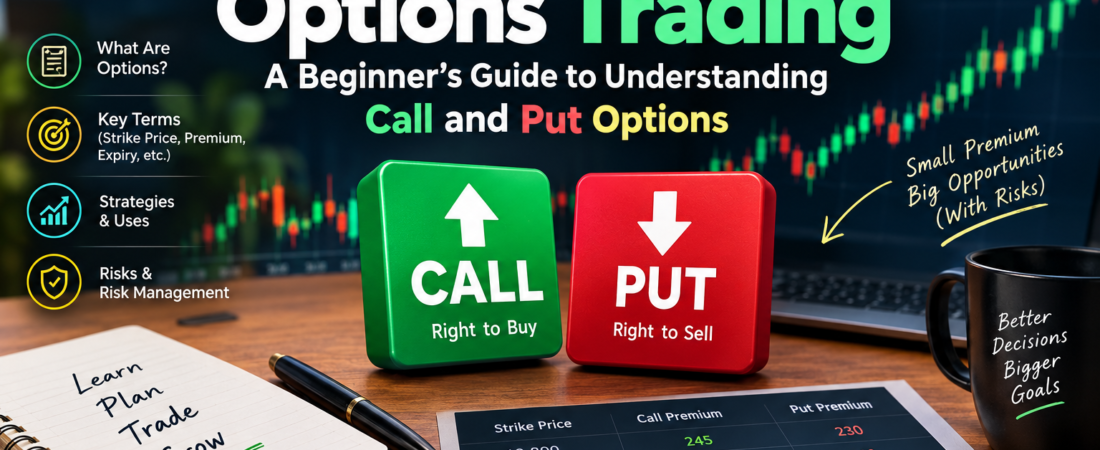
Options trading gets a lot of buzz — and for good reason. It lets you take a position on where the market’s likely to go, without ever owning the asset itself. The whole idea sounds exciting, but honestly, all those new words thrown around — Call, Put, Strike Price, Premium, Expiry, Implied Volatility — can make your eyes glaze over. Especially when you’re new.
But once you cut through the jargon, the basics aren’t rocket science. Here’s a rundown of what options are, how Calls and Puts work, the lingo you’ll hear again and again, and what beginners need to keep in mind.
So, What Are Options?
An option is basically a contract that gives you a choice: buy or sell an asset — like a stock, commodity, currency, or even an index — at a set price, and only within a certain timeframe.
That “expiration date” really matters. Unlike stocks, you can’t just sit on an option and hope for the best. It has a shelf life, and once that date hits, it’s game over.
Take this example: Maybe you think a certain index is about to climb over the next month. Instead of coughing up the cash to buy those index shares, you might buy a Call option to make a bullish bet. But keep in mind, options expire. Prices can swing wild, and that clock’s always ticking.
Call Options — What Do They Actually Do?
Think of a Call option as a ticket that lets you buy something at a fixed price. Use a Call if you believe prices are headed up.
Here’s how it might work: the Nifty index sits at 20,000, and you grab a Call with a strike price of 20,100. If the index jumps past 20,100, your Call climbs in value. If the market drifts sideways or drops, your Call loses value and could even expire worthless.
What About Puts?
Puts are the reverse. They give you the right to sell the asset at a certain price. Traders buy Puts when they think the asset’s heading down.
So, if Nifty’s at 20,000, and you buy a Put with a strike price of 19,900 — if that index slides lower, your Put gains value. If the index stays put or rises instead, your Put quickly drops in value as expiration nears.
Calls vs. Puts, In Everyday Words
It’s simple to remember:
Call = bullish outlook = right to buy
Put = bearish outlook = right to sell
That’s the directional part. But there’s more to how options are priced — volatility, time until expiry, and the strike price all factor in and can change what you pay.
Key Terms You’ll Hear a Lot
Here’s the essential language you need to know:
Strike Price: The price you can buy or sell at. If you get a 20,000 Call, that’s your strike.
Premium: What you pay to buy the option upfront. If things don’t go your way, you lose this payment. It’s the riskiest part.
Expiration Date: Every option comes with a ticking clock. As time runs out, your window closes, and the risk ramps up.
That’s it. Understand these basics, and you’ve got a solid start.