
Saving money can feel difficult when your income is already limited. After paying for rent, food, transportation, bills, and other basic needs, there may not seem to be much left at the end of the month.
But saving money on a low income is still possible. You don’t need to save a huge amount every month. Even small, consistent savings can gradually create a financial cushion and make unexpected expenses easier to handle.
The key is not to focus on saving a perfect amount. Instead, focus on building better money habits.
1. Start by Knowing Where Your Money Goes
Before trying to save more, understand how you currently spend your money.
For one month, write down your income and every major expense. This can include:
- Rent or housing
- Groceries
- Electricity and other bills
- Transportation
- Phone and internet
- Debt payments
- Entertainment
- Online shopping
- Eating outside
You may discover that some small expenses are taking more money than you expected.
The goal isn’t to stop spending completely. It’s to understand your spending so you can make better decisions.
2. Create a Simple Budget
A budget doesn’t have to be complicated.
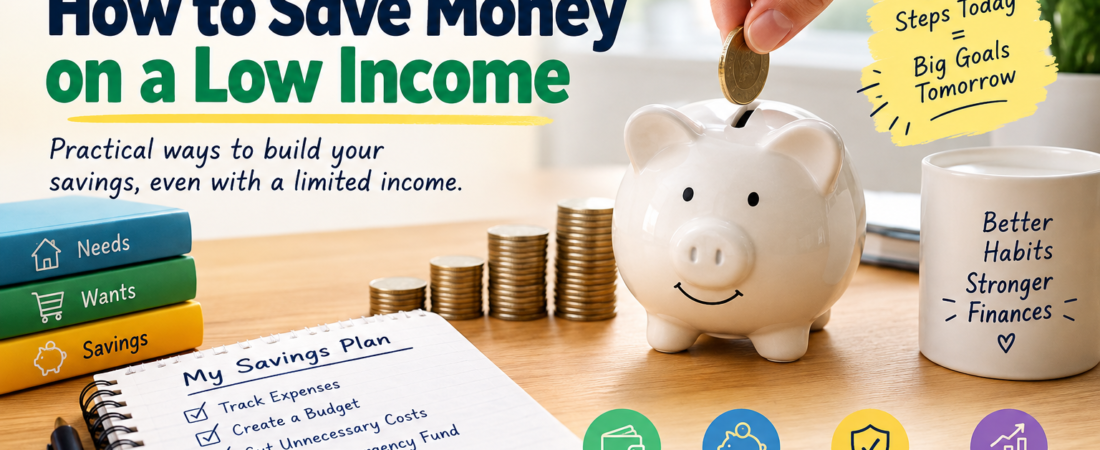
Start by dividing your income into three basic groups:
Needs: Expenses you must pay, such as food, housing, transportation, and essential bills.
Wants: Things that are enjoyable but not essential, such as restaurant meals, subscriptions, shopping, and entertainment.
Savings: Money you keep for emergencies and future goals.
If your income is low, don’t worry about following a specific budgeting rule perfectly. Your situation may require a different approach.
Even saving 2%, 5%, or 10% of your income can be a useful starting point.
3. Save Money Before You Spend It
One common mistake is waiting until the end of the month to save whatever money is left.
For many people, nothing is left.
Instead, try saving immediately after receiving your income. Even if you can only put aside a small amount, make it a regular habit.
For example, if you receive $500, you could start by saving $10 or $20.
The amount isn’t as important as developing the habit of paying yourself first.
4. Build a Small Emergency Fund
An emergency fund can protect you when something unexpected happens.
A broken phone, medical expense, job interruption, or urgent repair can put pressure on a tight budget.
You don’t need to build a large emergency fund immediately.
Start with a small target such as:
- $50
- $100
- $250
- $500
Once you reach your first goal, you can gradually work toward having enough money to cover several months of essential expenses.
Keep this money separate from your everyday spending account if possible.
5. Reduce Unnecessary Subscriptions
Subscriptions can quietly consume a significant amount of money.
Check your:
- Streaming services
- Music subscriptions
- Gaming memberships
- Apps
- Gym memberships
- Software subscriptions
- Other recurring payments
Ask yourself whether you actually use each service.
If you have three streaming services but regularly use only one, cancelling the others could free up money every month.
Small monthly savings can add up over a year.
6. Plan Your Grocery Shopping
Food is an essential expense, but there are often ways to reduce the cost without eating poorly.
Before going shopping:
- Make a list.
- Check what you already have at home.
- Plan a few meals for the week.
- Compare prices.
- Avoid buying food simply because it looks attractive.
Cooking at home more often can also reduce spending on takeout and restaurant meals.
You don’t need complicated recipes. Simple meals made with affordable ingredients can often be enough.
7. Be Careful With Small Purchases
A coffee here, a snack there, an impulse purchase online — individual expenses may seem insignificant.
But repeated small purchases can become a noticeable amount over time.
For example, spending $5 several times a week could eventually become hundreds of dollars over a year.
This doesn’t mean you should never enjoy yourself. Instead, decide which small purchases actually matter to you and reduce the ones you don’t really value.
8. Use a 24-Hour Rule for Non-Essential Purchases
Impulse buying can make saving difficult.
Before purchasing something you don’t need, wait 24 hours.
For more expensive purchases, consider waiting several days or even a week.
During that time, ask:
- Do I actually need this?
- Can I afford it without using debt?
- Will I still want it next week?
- Is there a cheaper alternative?
Sometimes the desire to buy disappears after you give yourself time to think.
9. Look for Ways to Reduce Your Fixed Expenses
Cutting small expenses is useful, but reducing a large recurring expense can have an even bigger impact.
Review expenses such as:
- Rent
- Transportation
- Insurance
- Phone plans
- Internet
- Loan payments
You may be able to negotiate a bill, change providers, refinance eligible debt, or choose a less expensive plan.
However, don’t make major financial decisions simply to save a small amount. Consider the full cost and any fees involved.
10. Avoid Comparing Your Lifestyle With Others
Social media can make it seem like everyone is buying new phones, going on expensive vacations, eating at restaurants, and driving expensive cars.
Remember that you usually don’t see the complete financial picture.
Someone may look financially successful while carrying significant debt.
Your goal should not be to match someone else’s lifestyle.
Your goal is to create a financial situation that gives you more stability and control.
11. Try to Increase Your Income
Saving is only one side of personal finance.
When your income is very limited, there may be a point where cutting expenses isn’t enough.
If possible, consider ways to increase your income through:
- Freelancing
- Part-time work
- Online services
- Selling unused items
- Learning a new skill
- Overtime or additional work
- Small business opportunities
Even an additional $50 or $100 per month can make saving easier.
The important thing is to choose opportunities that are realistic for your skills, available time, and situation.
12. Save Unexpected Money
Sometimes you receive money that wasn’t part of your normal monthly income.
This could include:
- A bonus
- A tax refund
- A gift
- Money from selling unused items
- Extra income from a side job
You don’t necessarily need to save all of it.
One approach is to divide it between savings, necessary expenses, and something enjoyable.
This allows you to make progress without feeling like you’re constantly sacrificing everything.
13. Keep Your Savings Separate
If your savings are sitting in the same account you use for everyday spending, it can be tempting to spend them.
Consider keeping your savings in a separate account.
You can also give your savings a specific purpose, such as:
- Emergency fund
- Future education
- Car repairs
- Home expenses
- Travel
- Long-term goals
Having a clear purpose can make it easier to leave the money untouched.
14. Don’t Try to Change Everything at Once
One of the biggest mistakes people make when starting a budget is trying to completely change their lifestyle overnight.
They stop eating out, cancel every subscription, stop buying anything enjoyable, and create an extremely strict budget.
That may work for a short time, but it can be difficult to maintain.
Instead, make a few changes at a time.
For example:
Month 1: Track your spending.
Month 2: Reduce unnecessary subscriptions.
Month 3: Start an emergency fund.
Month 4: Find one way to increase your income.
Small improvements can become long-term habits.
A Simple Example
Imagine someone earns $1,500 per month.
After essential expenses, they may have very little money left.
Instead of trying to save $300 immediately, they could start with $30.
They might then:
- Save $30 automatically each month.
- Reduce one unnecessary subscription.
- Cook at home a few more times each month.
- Reduce impulse purchases.
- Put some extra income into savings.
If their financial situation improves, they can gradually increase their monthly savings.
The important part is consistency.
Final Thoughts
Saving money on a low income isn’t about becoming extremely strict with every dollar.
It’s about making intentional decisions with the money you have.
Start by understanding your spending, create a realistic budget, reduce expenses that don’t add much value, and build your savings slowly.
Most importantly, don’t feel discouraged if you can only save a small amount right now.
Saving $10 consistently is better than planning to save $200 and never starting.
Your financial situation can change over time. By developing good money habits today, you can create a stronger foundation for tomorrow.
Frequently Asked Questions
Can I save money if my income is very low?
Yes. The amount you can save may be small, but even a modest and consistent amount can help you build an emergency fund over time.
How much should I save each month?
There is no single amount that works for everyone. Start with an amount you can realistically afford after covering essential expenses, then increase it when your income or financial situation improves.
What should I save for first?
For many people, building a small emergency fund is a useful first goal. After that, you can work toward larger financial goals based on your personal situation.
Should I stop spending money on things I enjoy?
Not necessarily. A sustainable budget should leave some room for enjoyment when possible. The goal is to control unnecessary spending rather than eliminate everything you enjoy.
Is increasing income as important as reducing expenses?
Both can help. Reducing unnecessary expenses can create immediate savings, while increasing income can give you more room to save and reach larger financial goals.