
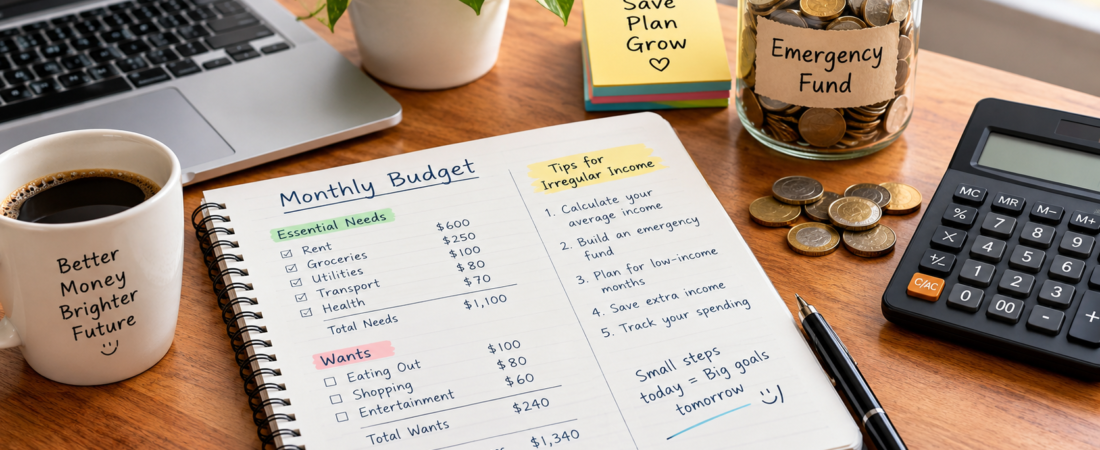
Managing money is not always easy, especially when your income changes from month to month. Some months you may earn more than expected, while in other months, your income may be lower. This can make it difficult to manage household expenses, pay bills, and save money for the future.
This situation is common among freelancers, small business owners, self-employed people, and those who work on a project basis.
The good news is that you don’t need a fixed salary to manage your money properly. With a little planning and some smart financial habits, you can make your income work better for you.
Let’s look at some simple ways to manage money when your monthly income is unpredictable.
1. Calculate Your Average Monthly Income
The first step is understanding how much money you actually earn.
If your income changes every month, don’t plan your expenses based on your highest earning month. Instead, look at your income over the last six months and calculate the average.
For example:
- Month 1: $1,500
- Month 2: $1,200
- Month 3: $1,800
- Month 4: $1,000
- Month 5: $1,400
- Month 6: $1,300
Your average monthly income is approximately $1,367.
This gives you a better idea of what you can realistically afford.
2. Separate Your Needs From Your Wants
When money comes into your account, it’s easy to spend it on things you don’t really need.
Start by dividing your expenses into two categories.
Needs:
- Rent or housing payments
- Groceries
- Electricity and water bills
- Transportation
- Essential medical expenses
Wants:
- Expensive shopping
- Eating outside frequently
- Entertainment subscriptions
- Unnecessary gadgets
Try to cover your essential expenses first. You can spend on wants when your financial situation allows it.
3. Build a Small Emergency Fund
An emergency fund becomes especially important when your income is unpredictable.
Imagine having a month with very little income and suddenly needing money for a medical bill or car repair. Without savings, you may have to borrow money or use a credit card.
Start with a small target instead of worrying about saving a large amount immediately.
Your first goal could be saving enough to cover one month of essential expenses. Gradually, try to build savings that can cover three to six months of necessary living costs.
Remember, consistency matters more than the amount you save initially.
4. Create a Monthly Budget Based on Your Lowest Income
One useful strategy is to prepare your budget using a conservative income estimate.
For example, if your monthly income usually ranges between $1,000 and $1,800, plan your essential expenses around $1,000.
This helps you avoid spending money that you may not receive next month.
If you earn more than expected, you can use the extra money for:
- Emergency savings
- Paying off debt
- Future financial goals
- Important upcoming expenses
This approach can help reduce financial pressure during low-income months.
5. Avoid Unnecessary Debt
When income is uncertain, taking on unnecessary debt can create additional stress.
Before using a credit card or taking a personal loan, think about whether you can comfortably repay the amount.
Try not to borrow money for lifestyle purchases or things that can wait.
If you already have debt, make a repayment plan and include the required payments in your monthly budget.
6. Save More During High-Income Months
Some months may bring extra income through freelance projects, business sales, bonuses, or additional work.
Instead of increasing your spending immediately, use these months to strengthen your financial position.
You can divide extra income between:
- Emergency savings
- Debt repayment
- Long-term goals
- Personal spending
You don’t have to save every extra dollar. The important thing is to avoid spending all your additional income without a plan.
7. Track Your Spending Regularly
You cannot manage your money properly if you don’t know where it is going.
Make a habit of checking your expenses at least once a week.
You can use a simple spreadsheet, notebook, or budgeting app to record your spending.
Pay attention to small expenses too. Regular purchases such as snacks, subscriptions, and online shopping may seem harmless individually, but they can add up over time.
Tracking your spending helps you identify areas where you can save money.
Final Thoughts
Managing money with an irregular income can feel challenging, but it doesn’t have to be complicated.
Start by understanding your average income, covering essential expenses, building an emergency fund, and avoiding unnecessary spending.
You may not be able to control how much money you earn every month, but you can control how you plan and use it.
Remember, good financial management isn’t about earning a huge amount of money. It’s about making better decisions with the money you already have.
Start small, stay consistent, and give yourself time to build better financial habits.
Disclaimer: This article is for educational and informational purposes only. It should not be considered professional financial advice.