
Have you ever reached the end of the month and wondered where all your money went?
You received your salary, paid the important bills, bought a few things, went out with friends, and suddenly there is not much money left. This happens to a lot of people.
The problem is not always that you earn too little. Sometimes, you simply don’t have a clear plan for your money.
That’s where a monthly budget can help.
A budget gives you a simple idea of how much money you have, what you need to spend, and how much you can save. You don’t need to be a finance expert to create one. Even a basic budget can make your money easier to manage.
What Is a Monthly Budget?
A monthly budget is basically a plan for your money.
You start with your monthly income and then decide how much you want to spend on different things such as rent, food, travel, bills, entertainment, savings, and other expenses.
For example, if you earn ₹40,000 a month, you shouldn’t just spend money whenever you need something. Instead, you can decide beforehand how much you want to keep for expenses and how much you want to save.
The numbers don’t have to be perfect. The main idea is to know where your money is going.
Why Should You Create a Monthly Budget?
Budgeting may sound boring at first, but it can actually make your financial life easier.
Here are some reasons why it is worth trying.
You Know Where Your Money Goes
When you write down your expenses, you may notice things you didn’t realize before.
Maybe you are spending too much on food delivery. Maybe you have subscriptions you barely use. Or maybe small online purchases are adding up.
A budget makes these things easier to notice.
It Helps You Save
Saving money becomes much easier when you decide on a savings amount before you start spending.
Instead of thinking, “I’ll save whatever is left this month,” you can make savings one of your monthly priorities.
It Can Reduce Financial Stress
Not knowing whether you have enough money for upcoming expenses can be stressful.
A simple budget gives you a clearer picture of your financial situation.
It Helps You Reach Your Goals
Maybe you want to buy a new phone, build an emergency fund, pay off a loan, travel somewhere, or start investing.
Having a monthly plan makes these goals feel more achievable because you can see how much you are putting toward them.
How to Create a Monthly Budget
Creating your first budget doesn’t have to take hours. You can start with a notebook, Excel sheet, Google Sheets, or even a simple notes app on your phone.
1. Start With Your Monthly Income
First, find out how much money you actually receive every month.
If you have a fixed salary, this is easy. If you are a freelancer or your income changes from month to month, you can use an average based on your recent income.
Your income could include:
- Salary
- Freelance work
- Business income
- Rental income
- Side income
- Other regular income
Try to use a realistic number. Don’t create your budget based on money you might earn.
2. Write Down Your Fixed Expenses
Next, list the expenses that you normally have to pay every month.
These could include:
- Rent
- Loan or EMI payments
- Internet
- Insurance
- School or college fees
- Regular subscriptions
For example, if your rent is ₹10,000 every month, put that amount into your budget first.
These expenses usually have a higher priority because you need to pay them regularly.
3. Track Your Variable Expenses
Now comes the part where things can get a little surprising.
Variable expenses change from month to month. They may include:
- Groceries
- Electricity
- Fuel
- Eating out
- Shopping
- Entertainment
- Personal expenses
If you’re not sure how much you spend, look at your bank statements or payment history from the last two or three months.
You might find some spending habits that you weren’t really aware of.
4. Separate Needs and Wants
This is one of the simplest ways to understand your spending.
Needs are things you generally need for everyday life, such as food, housing, basic bills, and transportation.
Wants are things you enjoy but can live without, such as expensive shopping, entertainment, eating out, or extra subscriptions.
This doesn’t mean you should stop spending money on things you enjoy.
The point is to know the difference so you can make better choices when money is limited.
5. Decide How Much You Want to Save
Now decide on a realistic savings amount.
For example, if you earn ₹40,000 a month, you might start by saving ₹4,000 or ₹5,000.
If that feels difficult, start with a smaller amount.
Saving ₹1,000 every month is still better than having no savings plan at all.
As your income increases or your expenses decrease, you can increase your savings later.
6. Build an Emergency Fund
An emergency fund is money kept aside for unexpected situations.
Your car may need a repair. You might have an unexpected medical expense. Or there could be a period when your income is lower than usual.
Instead of depending immediately on a credit card or loan, an emergency fund can give you some breathing room.
Start small if necessary. The important thing is to build the habit.
7. Give Your Money a Job
Once you’ve listed your income and expenses, divide your money into different categories.
For example:
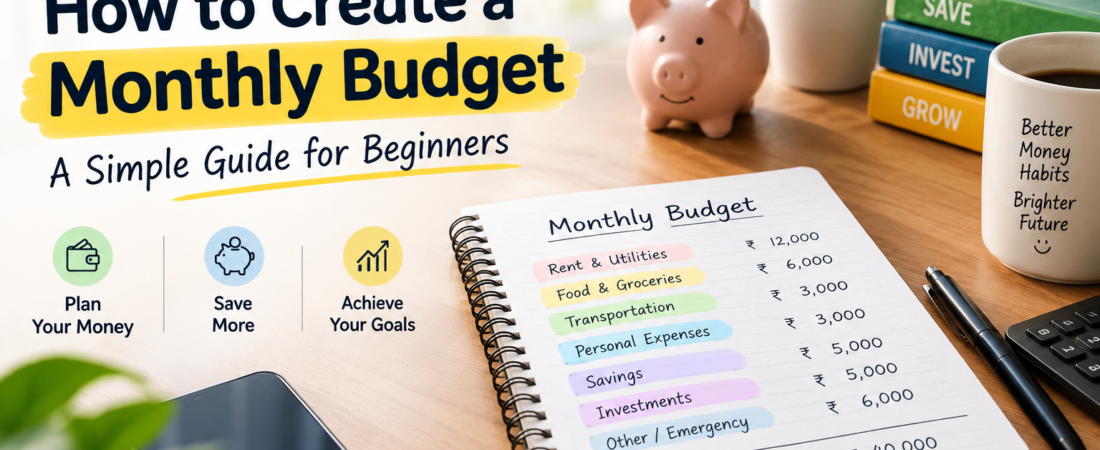
| Category | Example Amount |
|---|---|
| Monthly Income | ₹40,000 |
| Rent & Utilities | ₹12,000 |
| Food & Groceries | ₹6,000 |
| Transportation | ₹3,000 |
| Personal Expenses | ₹3,000 |
| Savings | ₹5,000 |
| Investments | ₹5,000 |
| Other/Emergency | ₹6,000 |
This is just an example. Your numbers will be different depending on your income and lifestyle.
The important thing is that your total planned spending should not be higher than your available income.
What Is the 50/30/20 Budget Rule?
The 50/30/20 rule is a popular budgeting method.
The basic idea is:
- 50% of your income for needs
- 30% for wants
- 20% for savings and financial goals
For someone earning ₹40,000, that could look like:
- ₹20,000 for needs
- ₹12,000 for wants
- ₹8,000 for savings and financial goals
But don’t worry if your numbers don’t match this exactly.
For some people, essential expenses may already take more than 50% of their income. Others may be able to save more than 20%.
Think of the 50/30/20 rule as a starting point, not a strict formula.
Common Budgeting Mistakes
Even with a budget, there are a few mistakes you should watch out for.
Making the Budget Too Strict
If you completely remove entertainment or personal spending, you may find the budget difficult to follow.
A realistic budget should leave some room for things you enjoy.
Forgetting Small Expenses
₹100 or ₹200 may not seem like much when you spend it once.
But if you make several small purchases every week, they can become a significant amount by the end of the month.
Ignoring Occasional Expenses
Some expenses don’t happen every month.
Car servicing, insurance, festivals, gifts, travel, and annual subscriptions are good examples.
Try to plan for these expenses instead of being surprised when they arrive.
Not Updating Your Budget
Your budget should change when your life changes.
If your salary increases, rent changes, you take a new loan, or your expenses change, update your budget accordingly.
How to Make Budgeting a Habit
The hardest part isn’t creating a budget. It’s actually following it.
You don’t need to check your budget every hour.
Instead, spend 10–15 minutes once a week looking at your spending.
Ask yourself:
- Am I spending more than planned?
- Which category is taking most of my money?
- Did I save the amount I planned?
- Is there anything I can reduce next month?
These small check-ins can make a big difference over time.
Final Thoughts
Creating a monthly budget doesn’t mean you can’t enjoy your money.
It simply means you are deciding where your money should go instead of wondering where it went.
Start with something simple. Write down your income, list your expenses, choose a realistic savings target, and track your spending for the next month.
Your first budget probably won’t be perfect—and that’s completely fine.
The goal is not perfection. The goal is to understand your money better and gradually build better financial habits.