
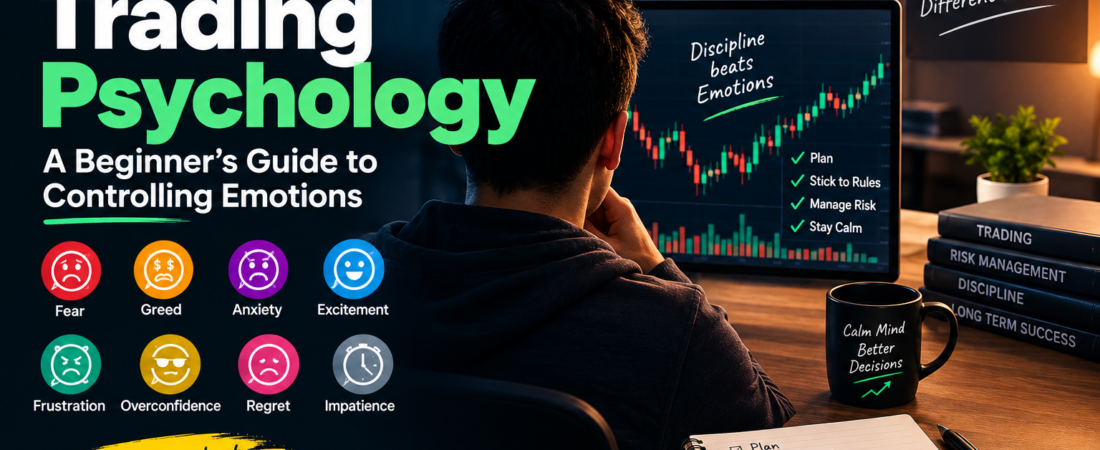
Trading isn’t just about squinting at charts or crunching numbers all day. What’s happening in your head is what really counts. You can have the best strategy out there, but a sudden rush of fear, greed, or impatience can knock you off your game before you even realize it.
That’s why psychology matters so much in trading. Your mindset—your thoughts, your feelings—shapes every choice you make. From pulling the trigger to closing a trade, it’s all about how you handle what’s going on inside.
Think of your strategy as the playbook, but your psychology is the coach. One makes the rules, the other keeps you following them.
What is Trading Psychology, Really?
Trading psychology is everything that happens inside your head when you put real money on the line. The risks, the unknowns—nobody tells you exactly how you’ll react when things don’t go as planned. Maybe you feel anxious, maybe excited, or sometimes you’re kicking yourself over missed moves.
None of those emotions make you a bad trader—they just show you’re human. The real trouble comes when those feelings take the wheel. You start ignoring your plan, risking too much, or bailing out too early, all because you’re chasing a feeling instead of following your logic.
Why Your Mindset Matters
Markets don’t give you straight lines or easy wins. Some days you’ll crush it, other days nothing goes right, and sometimes the market throws a curveball that fakes you out. If your mood swings with every trade, your overall strategy falls apart fast.
Score a few big wins back-to-back, and you might start thinking you’re invincible, taking risks that don’t fit your original rules. Or maybe you hit a cold streak, then start desperate “revenge” trades to dig yourself out, only to end up deeper in the hole. You’ve got to catch yourself before things snowball.
Let’s Talk Fear
Fear has a thousand faces in trading. Fear of losing, fear of missing out, or fear of sticking to your stop-loss. Sometimes fear keeps you glued to the sidelines. Other times it makes you exit way too early.
Picture this: your plan says stay in, but there’s a little drop and suddenly you panic. You pull the plug way before your stop-loss, just to calm your nerves. Nothing changed except your confidence.
Now, Greed
Greed sneaks up when you start thinking every trade is a golden ticket. You double up, stretch your targets, or start chasing anything that moves just because you’re hunting for that next big win. That’s when rulebooks get ignored.
This is why your plan needs hard lines—position sizes, risk limits, exactly how and when you exit. You want those numbers on paper before you even look at the “Buy” button.
Revenge Trading—the Fast Track to Blowups
Losing hurts. But the knee-jerk urge to “win it back” with a wild trade right after a loss almost always goes sideways. You lose, you get mad, you up your bet, you lose again, and suddenly you’re not trading your plan at all.
Break the cycle with real limits. Maybe you only allow yourself two losses in a row before you step away, or set a daily cap and respect it, no matter what.
FOMO—Fear of Missing Out
You see the market taking off and suddenly it feels like you just have to get in, no matter what. That’s FOMO—a recipe for bad entries and ignoring your normal routine. Honestly, it’s better to miss a trade than chase a sloppy one. Another opportunity is always just around the corner.
The Trouble with Winning Streaks
Win a few times in a row and suddenly you start thinking you can’t lose. That’s when you start making bigger bets, loosening your standards, or skipping those all-important stops.
Every trade deserves the same careful approach, even if you’re riding high. Getting careless after a good run is how you lose it all in a single trade.
Taking Losses in Stride
Losses happen to everyone, even the best. The key isn’t dodging them; it’s keeping them small and sticking to your risk rules.
If you stuck to your plan and took a loss, that’s not failure. Learn from it, but don’t spiral or start swinging wildly to win it back.
Patience—Rare, But Crucial
Some days, the setup just isn’t there. Maybe the market’s slow, maybe it’s choppy. Feeling like you’ve got to make a trade just because you’re at your screen rarely ends well.
Let patience do its thing—you’re better off waiting for a true signal. No trade at all beats forcing a weak one.
Discipline > Motivation
Motivation may get you started, but discipline is what keeps you trading well. Habits matter more than hype.
Disciplined traders:
- Stick to their setups.
- Respect risk and stop-loss rules.
- Avoid revenge trades.
- Keep detailed journals.
- Know when to stop for the day.
Motivation fades. Discipline and routines are your safety net for the times you just don’t feel like it.
Trading Plan: Your Emotional Guardrail
Your plan is there when your emotions threaten to take charge. It gives you something solid to lean on.
A solid plan spells out:
- What you’re trading.
- The timeframes you use.
- When to enter and exit.
- How much to risk per trade.
- What makes you sit out.
- Where you put your stop-loss.
- The point where you call it a day after losses.
Everyone’s plan is unique, but you need one. No exceptions.
Psychology and Risk Management—They’re Linked
When you risk too much on any single trade, every tiny price move feels huge. Stress skyrockets, and so does the urge to break your own rules.
Risk management isn’t just about your account—it keeps your emotions in check. Trade small enough that you can stick to your plan, no matter what happens.
Journaling—Simple, But Powerful
Keep a journal. Track the date, what you traded, your entry and exit, how much you risked, and most importantly, how you felt. Patterns show up, and when you start to see the same mistakes—like nervous exits after losing days—you can actually fix them.
Ways to Build Better Trading Psychology
Nobody’s born a flawless trader. You build mental strength the same way you build any skill—with practice and patience.
- Lower your risk until every loss feels manageable.
- Stick to one strategy instead of bouncing around.
- Plan your entry/exit and your risk before entering.
- Accept that losses are part of the process.
- Walk away for a bit after a loss.
- Don’t chase after trades you missed—there will always be more.
- Review every trade—wins and losses.
- Judge yourself by whether you stuck to your plan, not just by profits.
One-Minute Pre-Trade Checklist
Ask yourself:
- Does this fit my setup?
- Am I acting on my plan or on emotion?
- What am I risking if I’m wrong?
- Where’s my stop?
- Where’s my target?
- Am I chasing out of FOMO?
- Has my trading volume for the day gotten out of hand?
- If this was my first trade today, would I still want it?
If you’ve got doubts, take a break.
The Right Mindset
Good trading isn’t about thinking you’ll win every trade. It’s about knowing the outcomes are always uncertain. Some days you lose, some days even your best setups flop, and sometimes the market just won’t budge. No single trade defines you as a trader.
Focus on making solid decisions and following your process. Let results take care of themselves.
Final Thoughts
Your mindset is just as important as your technical know-how. You can master every indicator out there, but if you’re letting your emotions blow up your plan, your account won’t last.
You can’t switch off fear, greed, or frustration. That’s fine. The real power comes from noticing them and building habits—discipline, routines, good risk control, honest reflection—that help you trade in spite of them.
You don’t control the market. But you control your own risk, your routine, and your reactions. That’s what keeps you in the game for the long run.
(Educational content only—trading always involves risk and you can lose money. Know your risk before you start.)